How to Build a Personal Brand on LinkedIn From Zero
Why LinkedIn Is the Right Place to Start
Building a personal brand on LinkedIn is one of the highest-leverage moves a professional can make right now — and this guide walks you through exactly how to do it, even if your profile has cobwebs. You will learn what to post, how to position yourself, and how to show up consistently without burning out. If you want to shortcut the learning curve, LinkedIn ghostwriting and brand strategy from Creategize can handle the heavy lifting while you stay focused on your work.
LinkedIn has evolved into a personal brand powerhouse, not just a place to park your resume. With over one billion members globally, the platform rewards professionals who share their expertise consistently — not celebrities, not influencers, not people with decades of followers. The playing field is more level than most people assume.
The professionals gaining traction right now are not the loudest ones. They are the ones with a clear point of view, a defined audience, and the discipline to post without waiting until they feel "ready."
Define Your Position Before You Post Anything
Posting without a clear position is the most common mistake professionals make. If your content could come from anyone in your field, it will be ignored by everyone in your field. Your position is the intersection of what you know deeply, who you serve specifically, and what perspective you hold that others do not say out loud.
Answer three questions before writing a single post: Who is this for? What problem does my expertise solve for them? What do I believe about this topic that most people in my space avoid saying? Your answers become your content filter — every post you write should trace back to at least one of them.
You do not need a niche so narrow it feels like a cage. A senior HR consultant can build a strong brand around leadership hiring without locking themselves out of adjacent conversations. Specificity attracts the right people; it does not repel everyone else.
What to Post on LinkedIn to Get Noticed
The content types that consistently build visibility on LinkedIn fall into three categories: lessons from your direct experience, perspectives on industry trends, and practical advice your audience can apply immediately. Opinion posts tied to a specific observation outperform generic motivational content almost every time.
A useful starting formula: lead with a single, specific observation — something you saw in a client meeting, a pattern across a decade of work, a mistake you made and corrected. Then explain what it means and what someone should do differently because of it. That structure works because it is concrete, credible, and actionable.
Pro tip: Your first line determines whether anyone reads the rest. Write it last, make it a single punchy sentence, and resist the urge to start with "I" or a question. A specific, slightly counterintuitive statement stops more thumbs than any hook formula.
Formats that perform well include short-form text posts under 150 words, longer narrative posts that walk through a specific story or lesson, and simple polls tied to a real question your audience faces. Video and carousels can work, but they require more production effort — start with text and earn the audience first.
How Often to Post and What Consistency Really Means
Posting two to three times per week is enough to build meaningful momentum without becoming a full-time content creator. The professionals who burn out on LinkedIn try to post daily before they have built a content system. Start with twice a week and protect that cadence for 60 days before increasing.
Consistency matters more than frequency. An account that posts twice a week for six months outperforms one that posts daily for three weeks and goes silent. The LinkedIn algorithm rewards accounts that post reliably, and more importantly, your audience notices patterns — they begin to expect and look for your content when you show up regularly.
Commenting on other people's posts is not optional busywork — it is reach amplification. Five substantive comments per week on posts from people in your target audience can drive more profile views than a post of your own, particularly in the early months when your follower count is still growing.
Optimize Your Profile So Content Works Harder
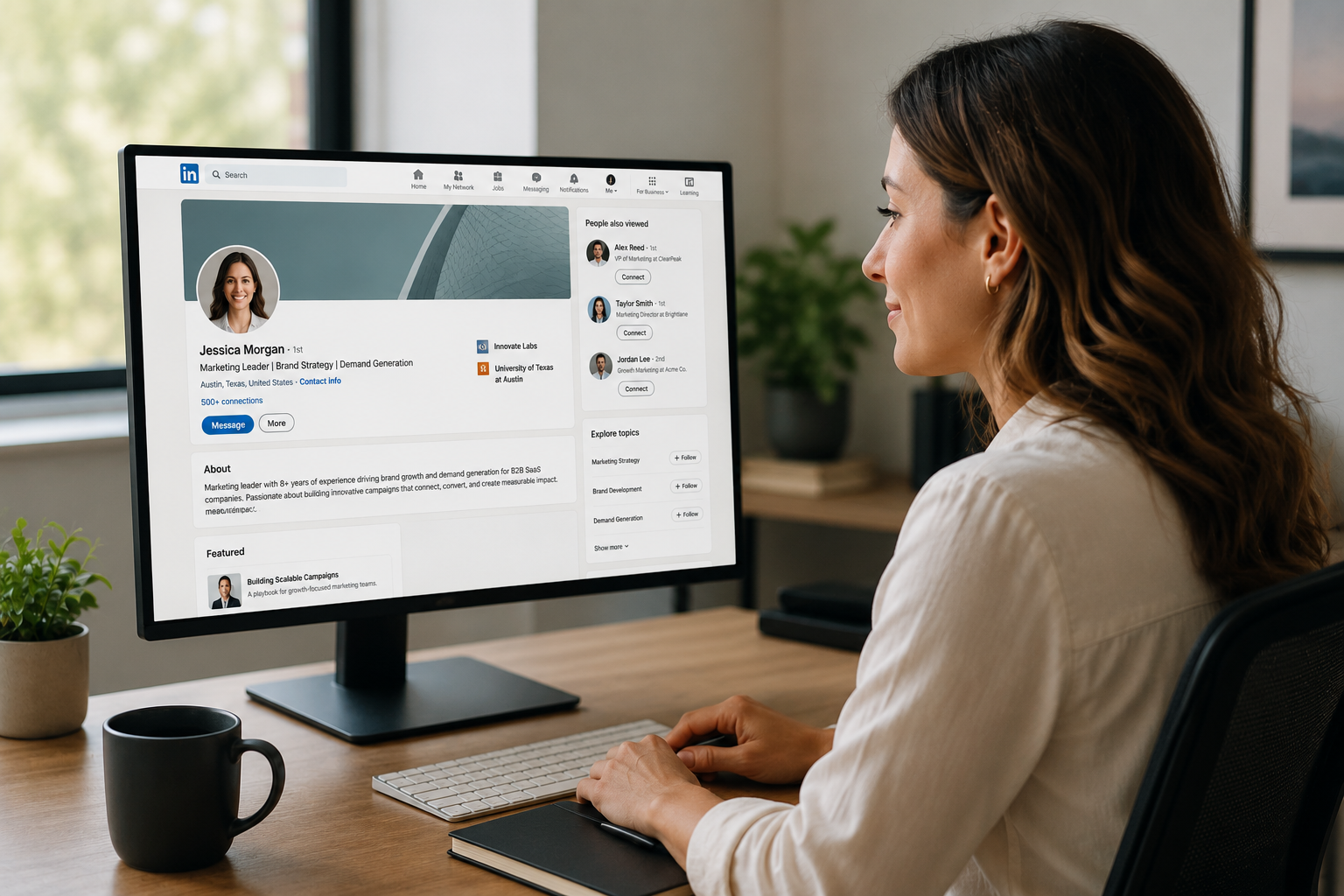
Your profile is your landing page. If someone reads your post and clicks your name, they decide in under ten seconds whether to follow you. A weak profile cancels out good content. Three things matter most: your headline, your featured section, and your about section opening line.
Your headline should say what you do and who you do it for — not your job title. "VP of Operations at Acme Corp" tells a stranger nothing useful. "I help mid-size manufacturers cut operational overhead without reducing team size" tells them exactly whether you are relevant to them. LinkedIn profiles are indexed by Google, which means your headline also functions as organic search real estate.
Your featured section should contain one or two items that demonstrate the value you deliver — a post that performed well, a case study, a lead magnet, or a link to your services. Keep it about you, not your employer's product page.
Write your headline for a stranger, not your current employer.
Open your About section with the problem you solve, not where you went to school.
Use a headshot with a clean background and visible face — amateur photos cost you credibility before you say a word.
Final Thoughts
Building a personal brand on LinkedIn is a compounding investment — slow at first, then faster than you expect once the foundation is set. The professionals who succeed are not the most talented in their field; they are the ones who show up with a clear point of view and post consistently enough for people to recognize them. If you want a proven system behind your effort, start building your brand with Creategize and get a strategy session tailored to your goals. Creategize also offers branded post templates and a consistent visual identity across platforms to make sure your profile looks as credible as it sounds.
